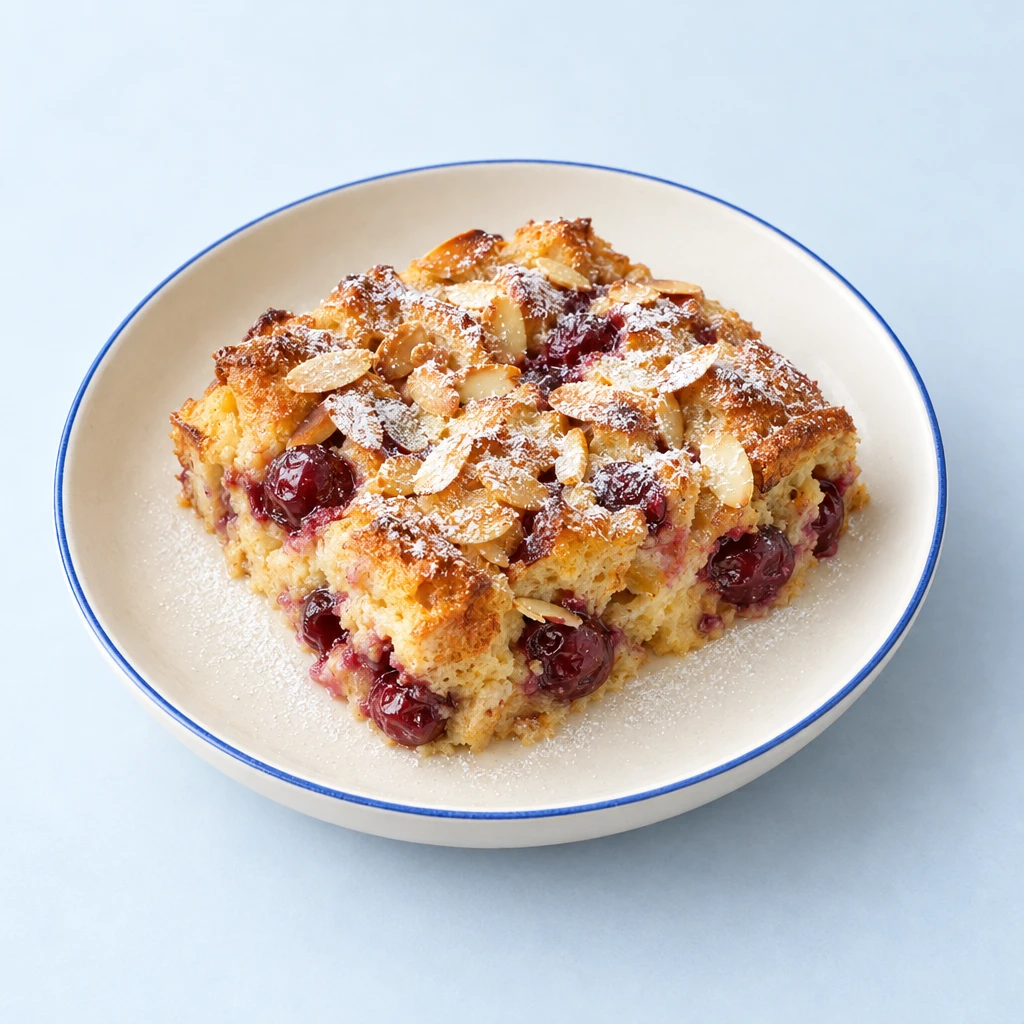
Kirschmichel – German Cherry Bread Pudding
DNutri-Score
- Calories
- 191.3 kcal
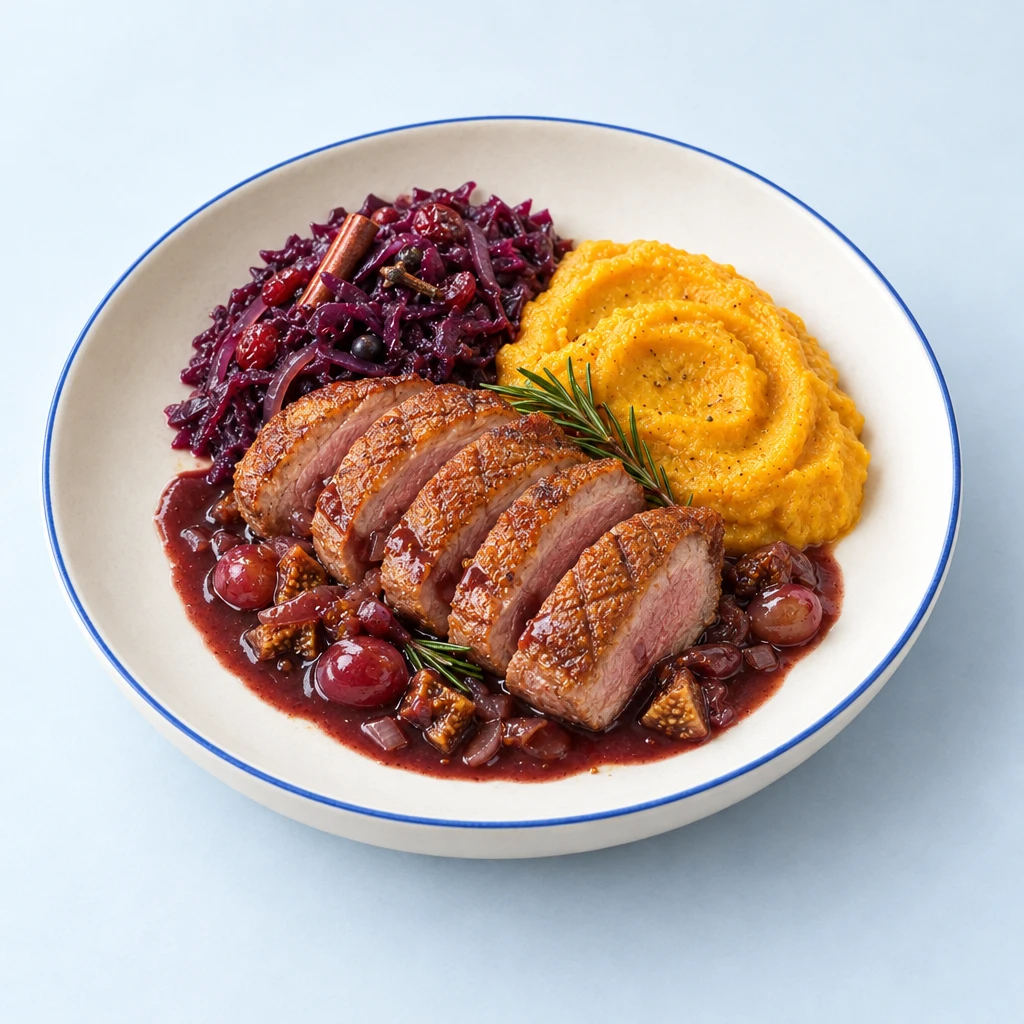
A festive autumn dish of duck breast with a sweet sauce made from dried figs, balsamic glaze, red wine and cream, accompanied by red cabbage and pumpkin purée.
STEP BY STEP
Preheat the oven to 80 °C and place an ovenproof dish inside.
Score the skin of the duck breast fillets in a diamond pattern, approximately 3 mm deep. Rub the fillets with pepper and salt.
Heat a non-stick frying pan without fat. Add a drop of water. Once it sizzles, place the fillets skin-side down in the pan and fry over a medium heat for 8 minutes, allowing the fat to render.
Turn the duck breast fillets over and fry for a further 8–10 minutes. Transfer to the ovenproof dish, skin-side up, brush with grenadine and cover. Keep warm or leave to finish cooking in the oven at 80 °C.
Dice the pumpkin flesh and cook with the vegetable stock for 15 minutes. Purée, add the maize flour and season to taste.
Deglaze with the apple juice and cook for 20 minutes. Season well with the remaining ingredients.
Finely slice or shred the red cabbage. Slice the onions into strips and gently fry in 1 tbsp duck fat over a medium heat until translucent. Add the red cabbage, spices and cranberries, then fry for a further 10 minutes, stirring frequently.
Blend the sauce and pass it through a sieve. Adjust the seasoning with the remaining ingredients. Finally, add the piece of dark chocolate and the halved, deseeded grapes. Just before serving, cut the fillets diagonally into slices and plate with a little sauce. Serve the remaining sauce in a sauce boat.
Pour off all but 2 tbsp of duck fat from the pan. Finely dice the figs and chop the shallot. Gently fry both in the duck fat. Deglaze with the grape juice and wine. Add the balsamic glaze and rosemary, then simmer gently for 10 minutes.
Publisher: meala GmbH
Nutrition based on BLS & additional sources. per serving
Nutrition is calculated from ingredient quantities and linked food composition data, per serving. Sources include the German Nutrient Database (BLS) and additional sources. Estimated quantities, product differences and preparation can affect actual values. Cooking losses and water absorption are not modelled separately. Missing values are left unspecified. Values are calculated estimates, not laboratory measurements.
Sources: BLS, additional food databases.
LOOKING FOR MORE INSPIRATION?